"In nature, nothing is created, nothing is lost, everything is transformed." — Antoine Lavoisier, Traité Élémentaire de Chimie (1789)
"In nature, nothing is created, nothing is lost, everything is transformed." — Antoine Lavoisier, Traité Élémentaire de Chimie (1789)
Score Calculation
Scores are earned when a reaction is triggered by placing two or more identical, adjacent molecule cells. Your score increases exponentially based on three major factors: the complexity of the molecule's elemental composition, the number of cells reacting at once, and the length of your chain reaction combo.
Unit Score
The Unit Score is the base score awarded for a single reacting molecule cell. The system is designed so that the unit score scales up dramatically as the variety and total number of elements in the molecule increase. You can look up the specific unit score for any molecule under the Statistics section on the Info page.
You can quickly open the Info page by double-tapping or long-pressing any cell directly on the grid.
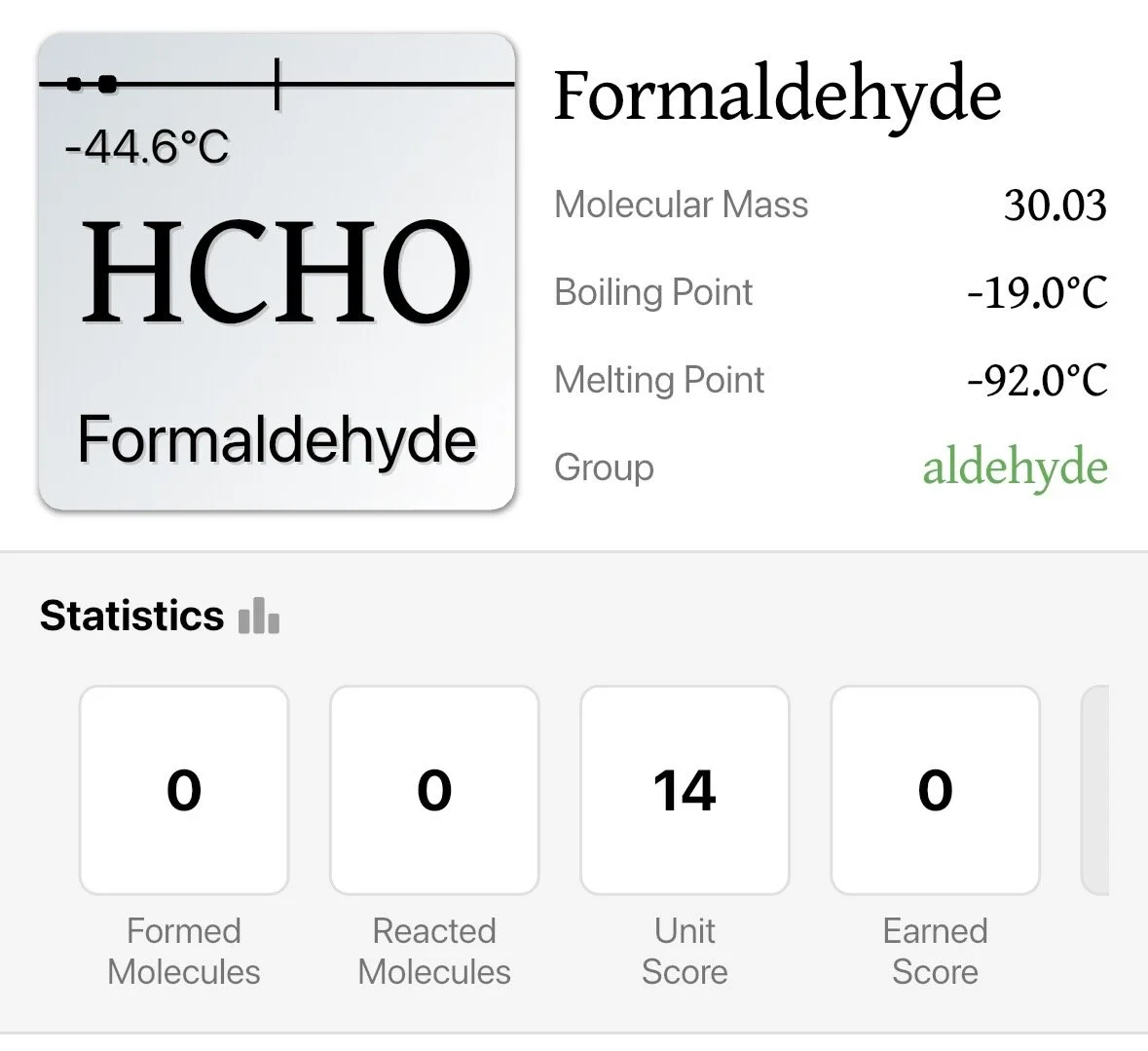
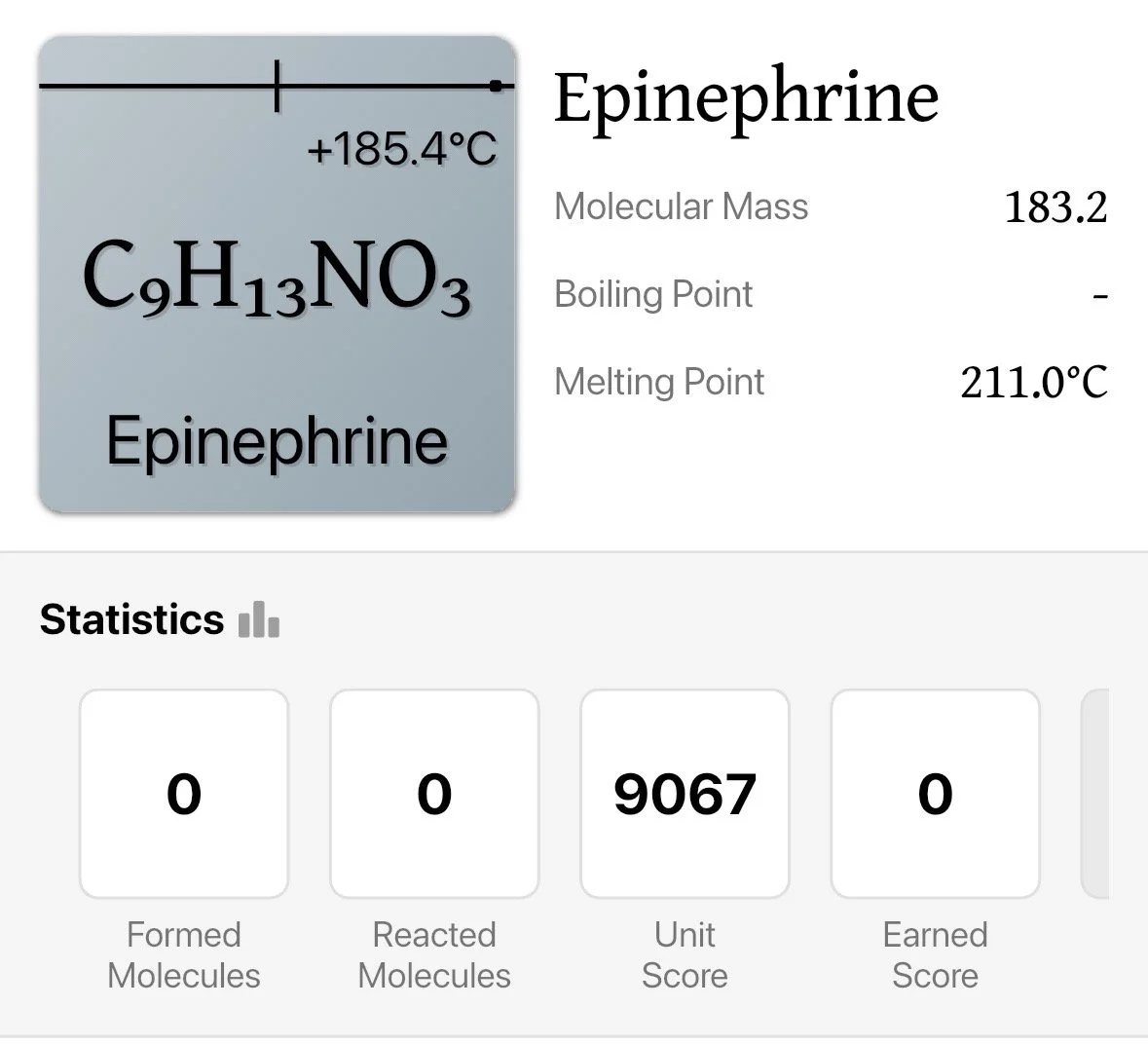
As shown in the example figure above: Formaldehyde has a simple structure with a unit score of just 14, whereas a complex molecule like Epinephrine boasts a staggering unit score of 9,067.
Cell Count
Reacting a larger cluster of cells simultaneously yields a much higher score multiplier. While the minimum requirement of 2 cells awards just 2x the unit score, the multiplier doubles for every single additional cell added to the reaction:
2 Cells: 2x Unit Score
3 Cells: 4x Unit Score
4 Cells: 8x Unit Score
5 Cells: 16x Unit Score
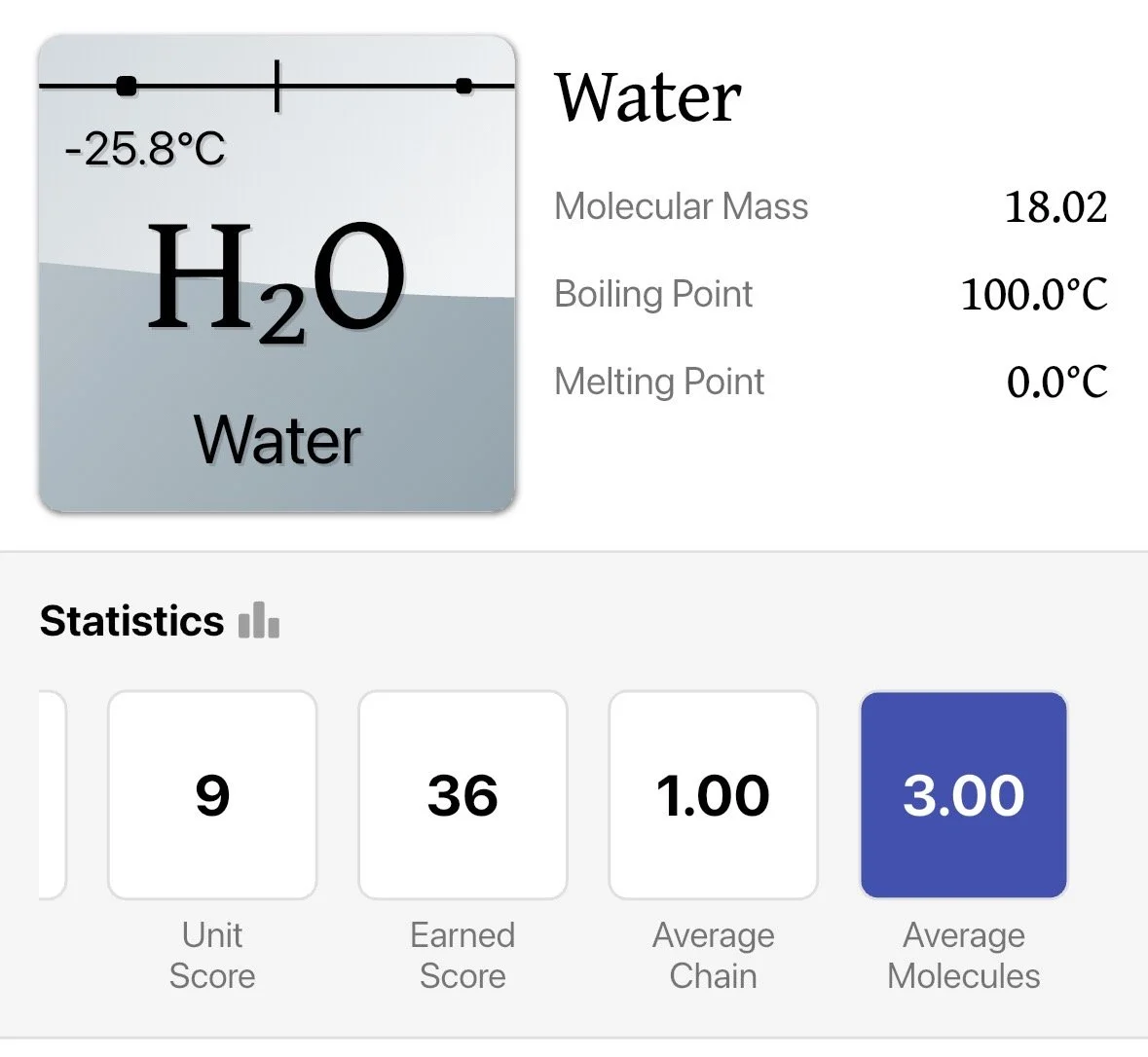
Look at the stats screen example above: When 3 Water molecules react at the same time, Water's base unit score of 9 is multiplied by four, netting you a total of 36 score in a single pop.
Chain Reactions
Chain Reactions are the single most explosive way to skyrocket your score in Alcyone. Triggering multiple consecutive reactions from a single initial move activates the chain effect. Each consecutive link in the chain doubles the multiplier for that specific reaction step (e.g., the 4th consecutive reaction receives an 8x multiplier).
The chain multiplier advances specifically when an alignment phase occurs between reactions.
If two separate reactions trigger at the exact same time on different parts of the grid before any cells shift, both are treated as independent first steps and receive a 1x multiplier.
However, if those initial reactions clear spaces and cause cells to align, any subsequent reaction triggered by that alignment counts as the third reaction, instantly unlocking a 4x multiplier.